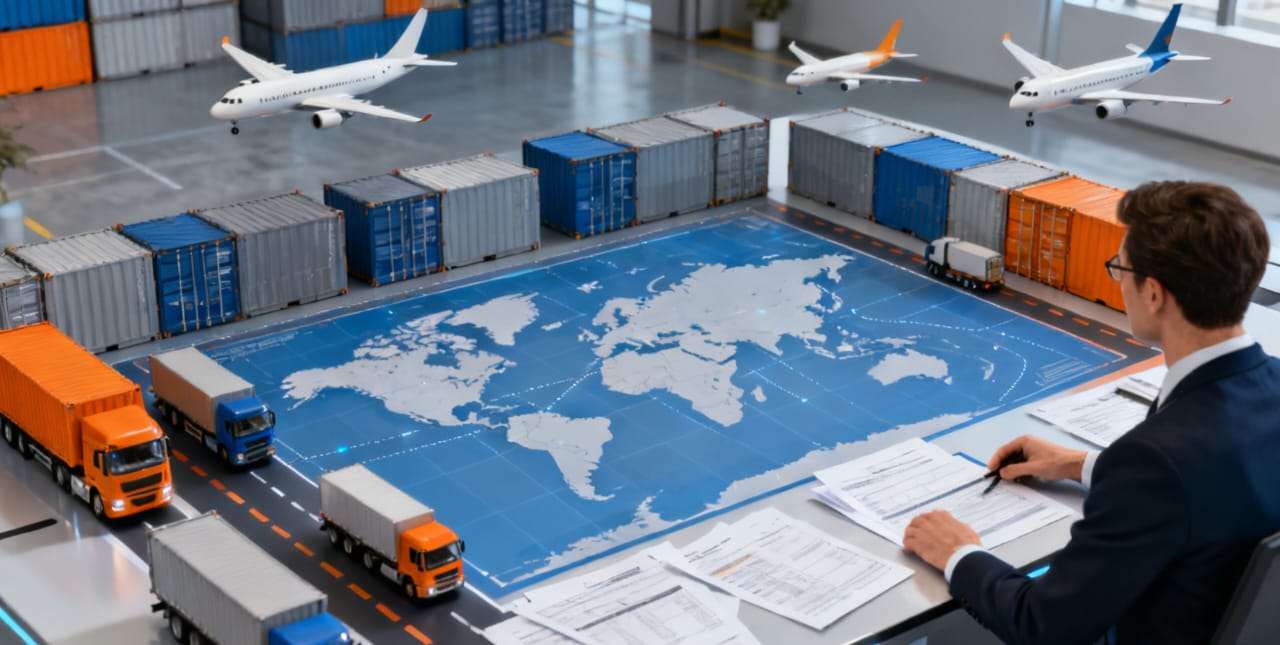
17 December 2025 – A Freight Forwarder or cargo shipping agent is a party that arranges the movement of shipments on behalf of the goods owner, in collaboration with various carriers. They typically use modes of transportation such as sea, air, land, or rail freight, and even combine several modes of transportation in a single shipment.According to FIATA, freight forwarders are referred to as “transport architects” because they are tasked with designing the most optimal shipping routes. Meanwhile in Indonesia, based on the Ministry of Transportation Regulation No. 49 of 2017, they are defined as providers of transportation management services that cover various activities ranging from receiving goods, managing documents, to delivering goods to the destination location.
Roles and Responsibilities of a Freight Forwarder
- Document Management: Proforma Invoice, Packing List, Export Service Note, Goods Export Notification Letter, Booking Confirmation Letter, as well as other documents required by the country of origin, destination, or transshipment point.
- Transport Coordination: Determining the most suitable mode of transportation based on the type of goods, shipment volume, desired schedule, and available budget, in addition to negotiating rates with carriers.
- Customs Handling: Ensuring that the entire export-import process complies with customs regulations and provisions in both the country of origin and destination, so that the export-import process runs smoothly without legal or regulatory obstacles.
- Risk Management: Reducing the risk of damage, loss, or delay by selecting appropriate routes and transportation methods, as well as providing cargo insurance options.
- Additional Services: Some freight forwarders also offer services such as warehousing, warehouse planning, distribution, and real-time shipment tracking.
Benefits of Using Freight Forwarder Services
- Cost Savings: With large shipment volumes, they can negotiate better rates with carriers and avoid hidden costs.
- Time Efficiency: They have extensive networks and experience, enabling them to speed up the shipping process and reduce waiting times.
- Administrative Convenience: All technical details and shipping administration are handled by them, allowing businesses to focus on core activities.
- Flexibility: They can address challenges such as tight deadlines, route changes, or operational disruptions quickly and effectively.
The Difference Between a Freight Forwarder and Regular Courier Services Freight forwarders focus more on large-scale international shipments (export-import), manage complex documents and customs regulations, and have a global network. In contrast, regular courier services usually handle domestic or small-scale international shipments, with rates determined based on weight, volume, and distance, and do not comprehensively manage all aspects of customs.

Comments are closed