Coconut is one of the most versatile agricultural products, with different parts of the fruit being processed into a wide range of products. While fresh coconut is commonly used in households and food preparation, it can also be processed into ingredients that are more convenient for storage, transportation, and different food applications.
One of these products is desiccated coconut, a dried coconut ingredient commonly used in food manufacturing and baking. Behind the finished product is a series of processing steps that transform fresh coconut into a convenient ingredient ready for different food applications.
What Is Desiccated Coconut?
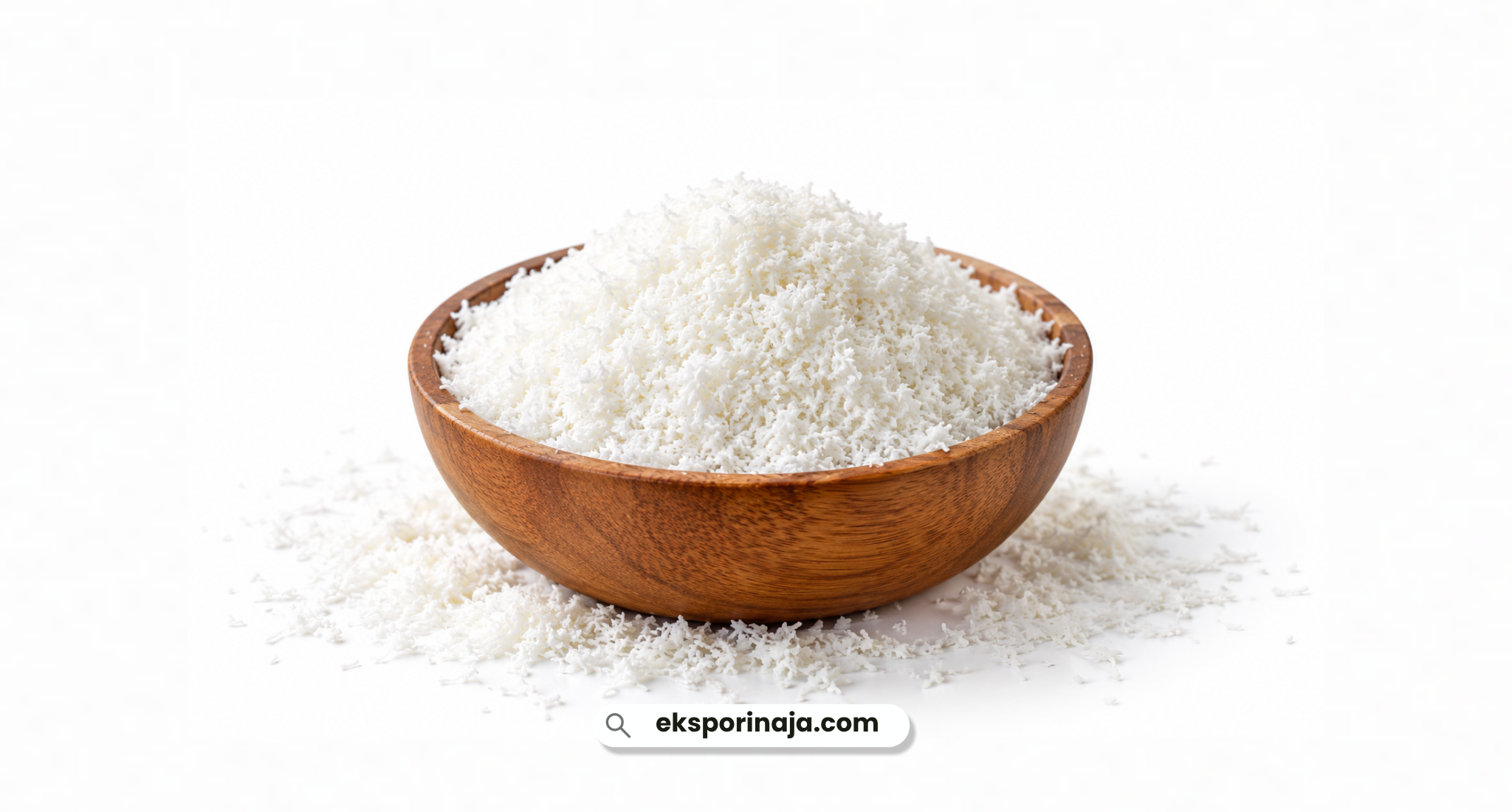
Desiccated coconut is made from the white flesh of mature coconuts that has been processed and dried. Depending on the production method and intended application, it can be available in different particle sizes and forms.
Its dry texture makes it suitable for a variety of food applications. It can be used as an ingredient, topping, filling, or coating depending on the formulation of the final product.
For food manufacturers, the form of desiccated coconut can be important because different applications may require different textures or particle sizes. This is why product specifications should be considered before sourcing.
How Desiccated Coconut Is Produced
Producing desiccated coconut involves several stages. The process generally begins with selecting suitable coconuts and removing the outer parts of the fruit to access the coconut meat.
The coconut meat is then cleaned and prepared before being grated into the required size. After grating, the coconut is dried under controlled processing conditions to reduce its moisture content and create the characteristic dry texture of desiccated coconut.
Once the drying stage is completed, the product can go through further handling, including sorting, grading, and packaging. These stages help ensure that the finished product is prepared according to the required specifications.
The exact processing methods can vary depending on the producer and the specifications required for the final product. Proper handling throughout the process is important to maintain product quality and consistency. The finished product can then be stored, transported, and incorporated into food production according to its intended use.
Different Forms for Different Applications
Desiccated coconut can be prepared in different particle sizes, giving buyers flexibility depending on how the ingredient will be used.
Finer forms can be suitable for applications where a smoother texture is preferred, while medium or coarser forms can provide more texture and visible coconut pieces. Shredded or flaked forms may also be used for specific bakery, confectionery, or topping applications.
Because different food products have different formulations, buyers should communicate their desired particle size and product specifications when sourcing desiccated coconut. Clear specifications help suppliers provide products that are appropriate for the intended application.
Where Desiccated Coconut Is Used
One of the reasons desiccated coconut is widely used is its versatility in food production. It can be incorporated into bakery products such as cakes, cookies, pastries, and other baked goods.
It is also commonly used in confectionery, desserts, snack products, cereals, and various coconut-based food products. Depending on its form, it can function as an ingredient within a product or as a visible topping and coating.
For food manufacturers, this versatility allows desiccated coconut to be used across different product categories while providing the familiar taste and texture associated with coconut.
What Buyers Should Consider When Sourcing
When sourcing desiccated coconut, buyers need to consider more than the product name. Specifications such as particle size, moisture level, appearance, packaging, and required quantity can influence whether a particular product is suitable for their production needs.
Packaging is also important because the product needs to be protected during storage and transportation. Buyers may have specific packaging requirements depending on their production process, distribution system, and destination market.
Clear communication between buyers and suppliers is therefore essential. Providing detailed product specifications at the beginning of the sourcing process can help reduce misunderstandings and ensure that the supplied product matches the buyer’s requirements.
Bringing Indonesian Desiccated Coconut to Global Markets
Indonesia’s coconut supply provides opportunities for businesses looking for coconut-based food ingredients. Desiccated coconut is one example of how coconuts can be processed into a product suitable for different food applications and international sourcing needs.
At PT Ekspor Indonesia Aja, we support businesses looking for Indonesian products across agriculture, seafood, and FMCG categories. Our sourcing activities connect buyers with suitable Indonesian suppliers based on product specifications, quantity, packaging requirements, and other sourcing needs.
Looking for desiccated coconut or other agricultural products from Indonesia? Contact PT Ekspor Indonesia Aja to discuss your sourcing requirements.
PT Ekspor Indonesia Aja
From Local to Global

Comments are closed