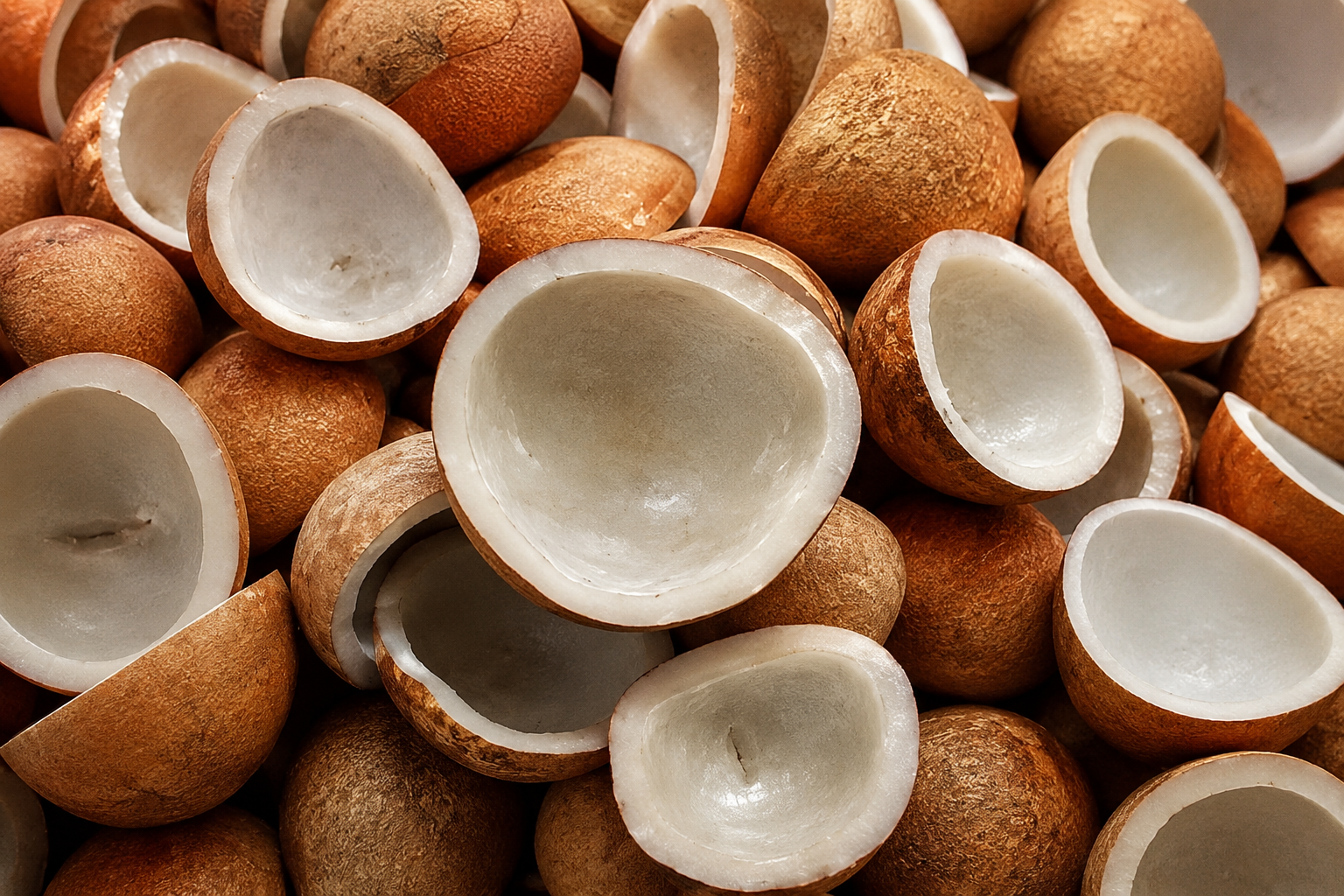
Indonesia is one of the world’s leading coconut-producing countries, supplying coconut-based commodities to manufacturers across the globe. Supported by abundant natural resources, favorable tropical conditions, and generations of farming expertise, the country has built a strong reputation as a reliable source of high-quality coconut products. Among these products, copra plays a fundamental role in the global coconut industry.
Before coconut oil becomes an ingredient in food products, cosmetics, soaps, personal care products, and numerous industrial applications, its journey often begins with copra, the dried kernel of mature coconuts. More than just an agricultural commodity, copra is the foundation of a value chain that connects Indonesian coconut-growing communities with businesses around the world.
As demand for natural and plant-based ingredients continues to increase, Indonesian copra remains an attractive option for companies seeking dependable supply, consistent quality, and long-term business partnerships.
Understanding Copra
Copra is produced by drying the white kernel of mature coconuts until it reaches a suitable moisture level for storage and processing. This process helps preserve the kernel’s natural oil while extending its shelf life and making it ready for further industrial use.
The primary purpose of copra is the production of coconut oil, one of the world’s most versatile vegetable oils. Beyond food manufacturing, coconut oil is widely used in cosmetics, personal care products, soaps, pharmaceuticals, and various industrial applications. As a result, copra has become an essential commodity within the global coconut value chain.
The Journey from Coconut to Copra
The production process begins with carefully selected mature coconuts harvested from coconut-growing regions throughout Indonesia. Harvesting at the right stage of maturity is essential because it helps ensure good oil content and consistent product quality.
After harvesting, the coconuts are dehusked and opened before the white kernel is separated from the shell. The kernels are then dried using either natural sunlight or controlled mechanical systems, depending on local production practices and available facilities.
Once the desired moisture level has been achieved, the copra is inspected, sorted, and packed according to customer requirements. It is then delivered to domestic processing facilities or prepared for export to manufacturers in overseas markets.
Why Copra Matters to Global Industries
Although copra is a relatively simple agricultural commodity, its contribution to modern manufacturing is significant. It serves as the main source of coconut oil, an ingredient found in thousands of products used every day.
Coconut oil extracted from copra is widely utilized in food manufacturing, confectionery, cosmetics, skincare products, soaps, detergents, personal care products, and pharmaceutical formulations. The versatility of coconut oil has made copra an important commodity for manufacturers seeking renewable and plant-based ingredients.
The value of copra continues even after oil extraction. The remaining coconut meal is commonly processed into livestock feed, allowing more of the coconut to be utilized efficiently while supporting a sustainable agricultural value chain.
Indonesia’s Role in the Global Coconut Supply Chain
Indonesia offers several advantages for businesses looking to source copra. As one of the world’s largest coconut-producing countries, it benefits from abundant coconut resources and year-round production supported by favorable tropical conditions and generations of farming expertise. This foundation has supported local livelihoods while contributing to one of the country’s most important agricultural sectors.
Beyond availability, Indonesia has a well-established export ecosystem with experienced producers, processors, and exporters supplying customers across Asia, the Middle East, Europe, Africa, and the Americas. Competitive production costs, growing processing capabilities, and access to major shipping routes further strengthen Indonesia’s position as a preferred sourcing destination.
Successful international trade, however, depends on more than product availability. Reliable suppliers should also understand quality standards, customer specifications, export documentation, and logistics coordination to ensure products arrive as expected.
What Buyers Consider When Sourcing Copra
Selecting a supplier involves evaluating more than price alone. Importers typically assess product quality, moisture content, cleanliness, packaging, production capacity, and consistency of supply before making purchasing decisions.
Export capability is equally important. Depending on the destination market, buyers may require detailed product specifications, proper documentation, appropriate packaging, and well-coordinated shipping arrangements. Clear communication throughout the process helps minimize delays and supports a smoother purchasing experience.
For companies planning long-term procurement, reliability, transparency, and responsive service often become the foundation of successful business relationships.
The Future of Indonesian Copra
The global shift toward natural, renewable, and plant-based ingredients continues to create new opportunities for coconut-derived products. As industries expand their use of these materials, copra remains an important commodity supporting the production of food, personal care products, cosmetics, and many other consumer goods.
With extensive coconut-growing regions, experienced farming communities, and a well-developed export sector, Indonesia is well positioned to meet this growing demand. By connecting local producers with manufacturers worldwide, Indonesian copra will continue to play an important role in the global coconut industry for years to come.
Source Indonesian Copra with PT Ekspor Indonesia Aja
Choosing the right export partner is essential for building a reliable supply chain. At PT Ekspor Indonesia Aja, we connect overseas buyers with trusted Indonesian copra producers while providing professional export support, from product inquiries and supplier coordination to specifications, documentation, and international shipping arrangements.
Looking for a reliable supplier of Indonesian copra? Contact PT Ekspor Indonesia Aja today to discuss your requirements and discover how Indonesian copra can become part of your long-term sourcing strategy.
PT Ekspor Indonesia Aja
From Local To Global

Comments are closed