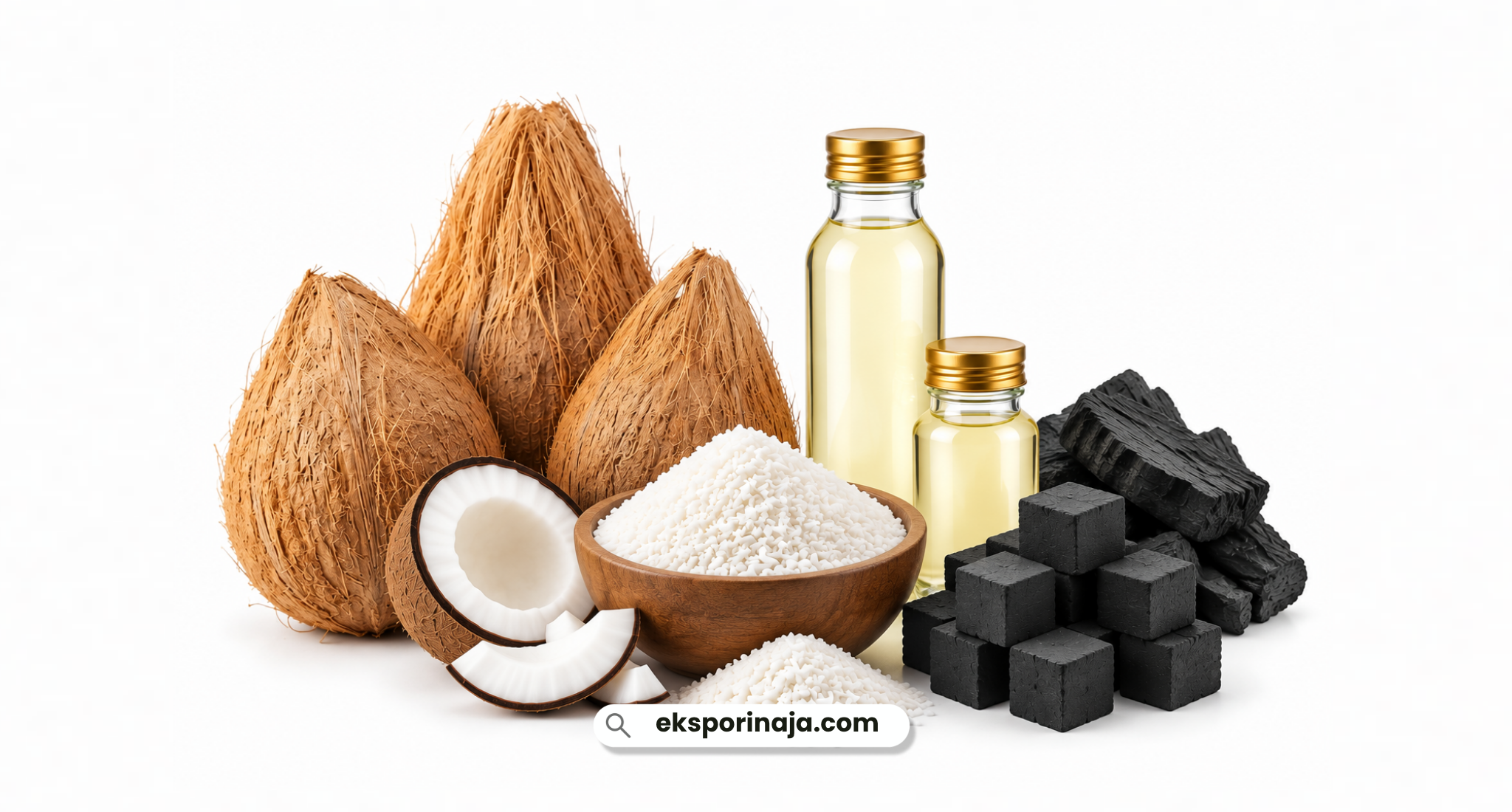
Coconut has long been an important agricultural commodity in Indonesia. Grown across many regions of the country, it supports farmers, local businesses, food production, and various downstream industries.
The coconut industry goes beyond the fresh fruit itself. Different parts of the coconut can be processed into products for food, beverages, personal care, household applications, fuel, and other industries. This variety creates opportunities for coconut products to serve different markets and meet different business requirements.
For international buyers, understanding the broader coconut industry provides a useful starting point when exploring coconut products from Indonesia.
Indonesia’s Coconut Industry at a Glance
Indonesia’s tropical environment provides suitable conditions for coconut cultivation across many regions. Coconut trees are commonly found in coastal and rural areas, where they have become part of local agricultural activities and livelihoods.
The availability of coconuts across different regions also creates a broad supply base. Depending on the area and supplier, buyers may find different product forms, processing capabilities, packaging options, and supply arrangements.
The industry is also connected to various stages of the supply chain. Farmers and producers provide the raw material, while processors and manufacturers transform coconuts into products for different markets. As a result, the coconut industry extends beyond cultivation to include processing, packaging, distribution, and international sourcing.
This connection between agriculture and downstream industries allows coconut to move from local production into a wide range of commercial applications.
From One Coconut to Many Products
One of the most notable characteristics of coconut is the variety of products that can be developed from it. Different parts of the coconut can be used or processed depending on the intended application.
Fresh and semi-husked coconuts can serve food and beverage markets, while coconut meat can be processed into products such as coconut milk, coconut cream, and desiccated coconut.
Coconut can also be processed into coconut oil and other food ingredients, while coconut shells can be used to produce charcoal and other coconut-based materials.
For buyers interested in specific products, these categories can be explored individually.
Learn more about Semi-Husked Coconut
Explore Indonesian Coconut Oil
Discover Indonesian Coconut Charcoal
The variety of products shows how the coconut industry can serve different markets rather than depending on a single end product.
A Diverse Supply Base Across Indonesia
Coconut production is not limited to one particular area in Indonesia. Coconut-growing regions can be found across different parts of the country, creating a broad agricultural supply base.
This regional diversity can provide opportunities for buyers looking for different coconut products. Suppliers may offer different product forms, processing capabilities, packaging arrangements, and available quantities depending on their location and operations.
For international sourcing, availability should be discussed directly with suppliers, as agricultural supply can change depending on production conditions, harvest periods, local demand, and other factors.
This makes supplier communication an important part of the sourcing process. Buyers can first identify the product and specifications they require, then work with suppliers to determine the most suitable sourcing arrangement.
Growing Opportunities for Coconut Products
The global market for coconut products includes both traditional applications and newer product categories. Coconut continues to be widely used in food and beverage products, while processed coconut ingredients allow the commodity to reach a broader range of manufacturers and consumers.
The development of different coconut products also creates opportunities beyond fresh coconut. Processed ingredients, beverages, cooking products, personal care products, and coconut-based materials can serve different market segments and business applications.
Another important aspect is the utilization of different parts of the coconut. Turning more parts of the raw material into commercial products can create additional opportunities across the supply chain.
For international buyers, this product diversity means there are various ways to explore the Indonesian coconut market. The most suitable opportunity depends on the buyer’s industry, target market, product requirements, and sourcing needs.
What International Buyers Should Consider
When sourcing coconut products from Indonesia, buyers should first determine the type of product they need and how it will be used. Fresh coconut, processed ingredients, coconut oil, and coconut shell products can have very different requirements.
Other considerations may include product specifications, quality, quantity, packaging, shelf life, availability, and consistency. Buyers may also have specific requirements related to labeling, documentation, or import regulations depending on the destination market.
For businesses planning regular purchases, supply consistency can be particularly important. Suppliers need to understand the buyer’s requirements and provide products that match the agreed specifications.
Clear communication from the beginning can make the sourcing process more efficient. Discussing product requirements, quantities, packaging, and destination-market needs in advance allows both sides to establish whether the product is suitable before moving forward.
Exploring Indonesia’s Coconut Potential for Global Markets
Indonesia’s coconut industry offers international buyers a diverse range of products and sourcing possibilities. From fresh and semi-husked coconuts to processed food ingredients, coconut oil, and coconut shell products, the industry can serve different markets and applications.
This diversity also creates opportunities for businesses looking beyond a single coconut product. Buyers can explore different product forms based on their target market, business model, and intended application.
For international buyers, sourcing coconut from Indonesia is therefore not simply about finding a coconut supplier. It is about identifying the right product, specifications, supply arrangement, and sourcing partner for the intended market.
Looking for coconut products from Indonesia? Contact PT Ekspor Indonesia Aja to discuss your product requirements and sourcing needs.
PT Ekspor Indonesia Aja
From Local to Global


Comments are closed