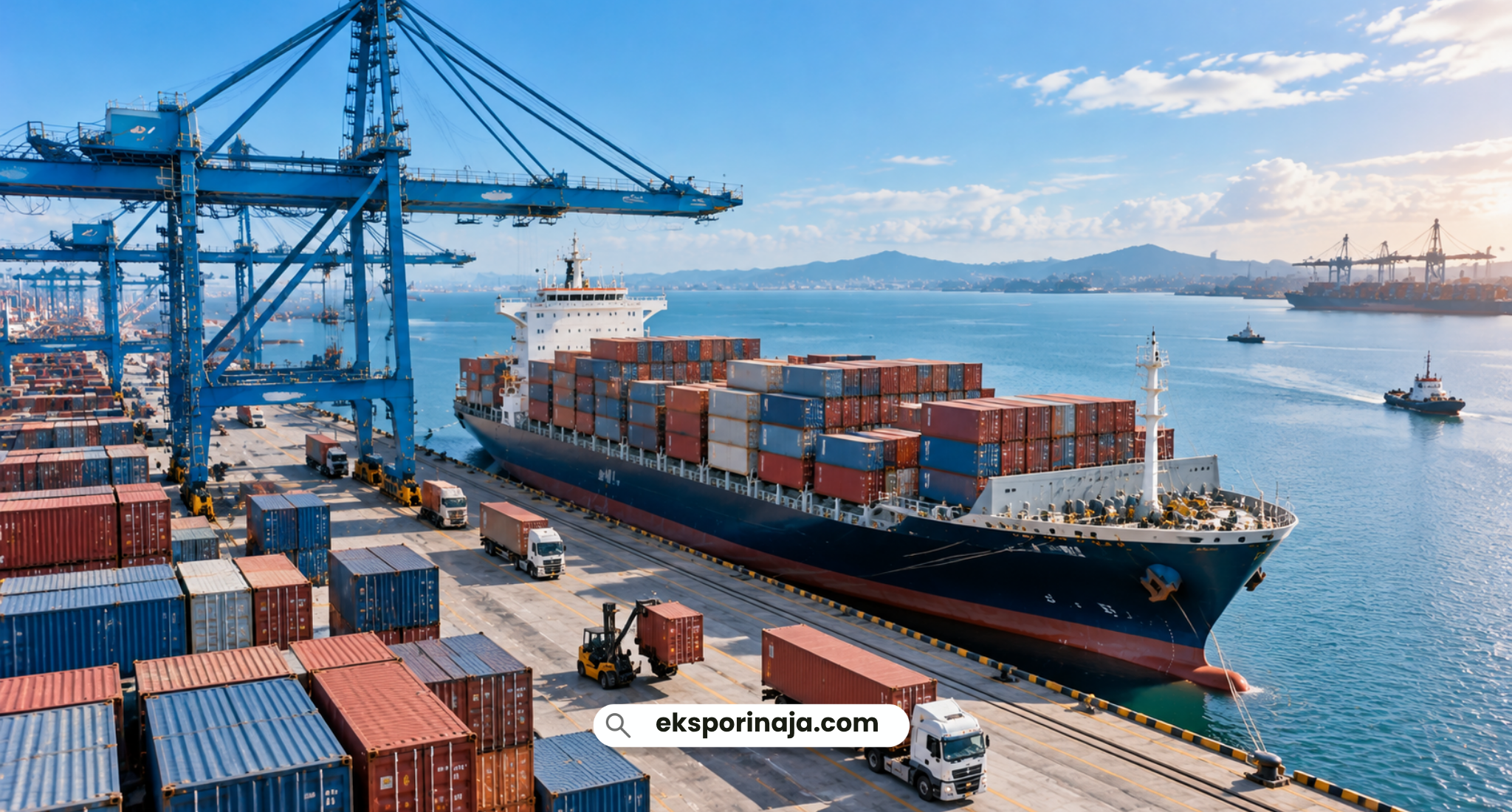
When a product is purchased from another country, the journey behind it often involves much more than transportation. Before reaching an international buyer, export goods go through a series of preparations, documentation, handling, and transportation processes.
For Indonesian products, this journey begins with local suppliers and continues through export preparation, logistics, customs procedures, and international transportation before finally reaching the destination market.
Understanding this journey can help international buyers gain a clearer picture of what happens between the initial product preparation and the arrival of goods in their market.
From Local Supply to Export Preparation
Before goods can be exported, the process begins with preparation at the local supply level. Product specifications, quantity, packaging, and other buyer requirements need to be clearly identified before shipment arrangements are made.
Different products may require different preparation. FMCG products, agricultural commodities, and seafood can have different handling, packaging, storage, and documentation requirements depending on their characteristics and destination market.
Clear product specifications help align the expectations of suppliers and buyers before the goods move into the export process.
Preparing Products for International Transportation
Export goods need to be prepared to withstand transportation and handling throughout their journey. Proper packaging helps protect products from physical damage, moisture, temperature changes, and other conditions that may occur during transportation.
For products that require specific storage conditions, appropriate handling and temperature control may also be necessary. These preparations help maintain the condition of the goods from the supplier until they reach the destination market.
Export Documentation and Customs Requirements
Export shipments require relevant documentation containing information about the goods, shipment, and parties involved in the transaction. Common documents may include commercial invoices, packing lists, and certificates, depending on the product and destination requirements.
Customs procedures and documentation requirements can vary depending on the destination country and type of product. Clear and accurate documentation helps support the customs process and reduces potential issues during shipment.
From Warehouse to Port
Once the goods are prepared, they move from the supplier or warehouse to the port or airport according to the shipping arrangements. This stage requires coordination between suppliers, logistics providers, and other parties involved in preparing the shipment.
The goods need to arrive according to the agreed shipping schedule, while the required documentation should also be ready. Proper coordination helps connect the physical movement of goods with the administrative requirements of international trade.
The International Journey
After leaving Indonesia, export goods begin their international journey. Depending on the product, shipment requirements, and destination, goods may be transported by sea or air.
During this stage, proper handling and storage remain important. Some products may require specific temperature or storage conditions throughout transportation. International shipments can also involve different handling stages before reaching the destination country, making proper packaging, documentation, and shipment coordination essential.
Arrival in the Destination Market
When the goods arrive in the destination country, they may go through customs clearance and other required procedures before continuing to the buyer. Additional requirements or inspections may also apply depending on the product and destination market.
After clearance, the goods can continue to the buyer’s warehouse, distribution center, or other designated location. This means the export journey does not simply end when the goods arrive at the port or airport. Final delivery is also an important part of the overall process.
Connecting Indonesian Products with Global Markets
The journey of export goods involves more than moving products from one location to another. It requires coordination between suppliers, buyers, logistics providers, documentation teams, and other parties involved in international trade.
For Indonesian products, this process creates a connection between local supply and international demand. Products from different sectors can reach overseas markets when their specifications, preparation, documentation, and transportation requirements are properly coordinated.
At PT Ekspor Indonesia Aja, we connect international buyers with Indonesian suppliers across seafood, agriculture, and FMCG products. Our sourcing support focuses on understanding buyer requirements and connecting them with suitable Indonesian suppliers based on product specifications, quantity, packaging preferences, and market needs.
Bringing Indonesian Products to the World
From local suppliers to international buyers, every export shipment goes through a series of stages before reaching its destination. Understanding this journey gives buyers a clearer view of how goods move across borders and why preparation, documentation, handling, and logistics are important throughout the process.
A better understanding of the export journey can also help create clearer expectations and smoother communication between buyers and suppliers.
Looking for products from Indonesia? Contact PT Ekspor Indonesia Aja to discuss your sourcing requirements.
PT Ekspor Indonesia Aja
From Local to Global

Comments are closed