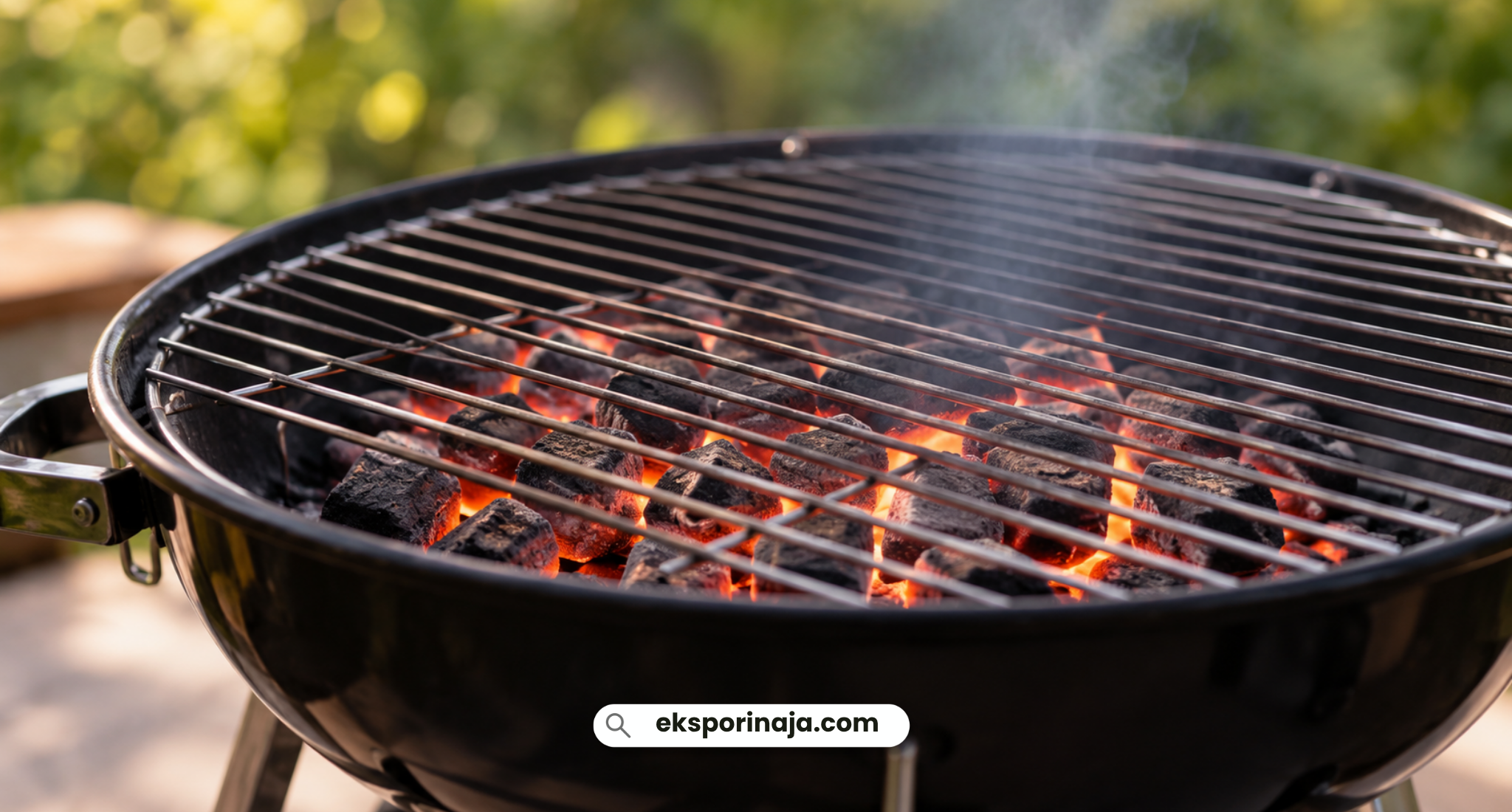
Choosing charcoal briquettes for BBQ involves more than simply selecting a fuel that burns. Different grilling styles require different heat levels, cooking times, and fuel arrangements. Understanding these differences can help users select briquettes that suit their cooking needs.
For importers, distributors, and food businesses supplying BBQ customers, knowledge of charcoal performance is also useful when comparing products and specifications. From quick grilling to slow cooking, the right choice depends on the cooking method, equipment, and expected performance.
Understanding Different BBQ Styles
Barbecue uses different cooking techniques depending on the type of food and the desired result. Two common methods are direct-heat grilling and indirect-heat cooking.
Direct-heat grilling places food directly above the heat source. It is often used for burgers, skewers, sausages, vegetables, and thinner cuts of meat that cook relatively quickly. Indirect-heat cooking, on the other hand, positions food away from the hottest area of the grill. This method is useful for larger cuts that need more time to cook thoroughly.
These techniques create different demands on the fuel. Direct grilling requires manageable heat for cooking and searing, while indirect cooking requires careful temperature control over a longer period. Understanding the intended BBQ style is therefore a practical starting point when choosing charcoal briquettes.
Why Charcoal Selection Matters
Charcoal provides the heat needed to cook food, but different products can have different burning characteristics. Their performance may depend on composition, density, size, and manufacturing quality.
Briquettes with relatively uniform shapes can be easier to arrange inside a grill, helping users organize the fuel according to their cooking method. However, shape and size alone do not determine how well a product performs. Heat output, ignition requirements, and burning duration should also be considered based on reliable product specifications.
Airflow plays an equally important role. The oxygen available to the burning charcoal affects combustion and heat production. Grill design, ventilation, and fuel placement can therefore influence the cooking temperature, even when the same type of briquette is used.
Rather than focusing only on maximum heat, users should consider how easily the fuel can be managed throughout the cooking process.
Choosing Briquettes for Direct-Heat Grilling
Direct-heat grilling is suitable for foods that cook over a relatively short period. Popular examples include beef patties, chicken skewers, sausages, and vegetables.
For this method, arranging the briquettes correctly helps create useful heat distribution. Spreading the fuel evenly can provide a broad cooking area, while concentrating it in one section creates a hotter zone for searing. Some grill users also maintain separate hot and cooler areas to manage foods with different cooking requirements.
When selecting briquettes for direct grilling, consider whether their heat output suits the grill and the food being prepared. The goal is to provide sufficient heat while maintaining control over the cooking process.
It is also important to allow the charcoal to reach an appropriate cooking stage before placing food on the grill. Following the product instructions and using suitable grilling equipment can help users manage the fire more effectively.
Selecting Briquettes for Low-and-Slow BBQ
Low-and-slow BBQ involves cooking food at a relatively low temperature over an extended period. It is commonly associated with larger cuts of meat that require more time to become tender.
For this method, predictable burning characteristics can be useful because the cook needs to maintain a suitable temperature throughout the session. The actual burning duration and heat output depend on the briquette formulation, airflow, weather conditions, and grill design.
Fuel arrangement also affects temperature management. Depending on the equipment, briquettes may be placed to one side of the cooking chamber or arranged to support a gradual, controlled heat supply. Adjusting the grill’s ventilation can help regulate combustion.
Before choosing briquettes for extended cooking, review the manufacturer’s specifications and confirm that the product is suitable for the intended application. Testing the setup before preparing a large meal can also help users understand how the fuel behaves in their equipment.
Factors to Consider When Choosing Briquettes
Several factors can help determine whether charcoal briquettes are suitable for a particular BBQ style.
Heat consistency matters when a recipe requires a relatively stable cooking temperature. Product specifications and practical testing can help users assess performance under appropriate conditions.
Size and shape influence how easily briquettes can be arranged inside a grill. Uniform pieces may make fuel placement more predictable, although the best arrangement depends on the equipment.
Burning characteristics should match the intended cooking method. Quick grilling and extended BBQ sessions may require different fuel-management approaches, so users should review product information rather than assume all briquettes perform identically.
Airflow and grill design affect how the fuel burns and how heat is distributed. Adequate ventilation is essential for combustion, while the grill’s construction influences temperature control.
Product suitability is another important consideration. Briquettes should be intended for cooking applications and used according to the manufacturer’s instructions. Products containing unsuitable additives or intended for industrial applications should not be assumed safe for food preparation.
Considering these factors helps buyers compare available products more carefully and choose briquettes according to their actual needs.
Coconut Charcoal Briquettes in BBQ Cooking
Coconut charcoal briquettes are produced from charcoal derived from coconut shells, an agricultural by-product. They are one option for users seeking charcoal fuel for grilling and BBQ applications.
The process of turning coconut shells into briquettes is another important part of understanding this product. Readers interested in the material behind the fuel can explore From Coconut Shells to Charcoal Briquettes: The Journey Behind the Product to learn more about the journey from raw material to finished briquettes.
Their suitability for BBQ depends on the product’s formulation, manufacturing quality, and stated performance characteristics. Factors such as ignition requirements, heat output, ash production, and burning duration should be evaluated using reliable product information rather than broad assumptions about all coconut-based briquettes.
For BBQ users and businesses supplying grilling products, the selection process should begin with the intended cooking method and equipment. Reviewing product specifications and confirming the product’s intended use can help buyers determine whether a particular type of coconut charcoal briquette meets their requirements.
Sourcing Coconut Charcoal Briquettes with PT Ekspor Indonesia Aja
Choosing the right briquettes starts with understanding how the product will be used. Cooking style, equipment, product specifications, and fuel-management requirements all influence the selection process.
For importers, distributors, and businesses looking for coconut charcoal briquettes from Indonesia, product details such as dimensions, packaging, quantity, and performance specifications are important considerations when evaluating sourcing options. Buyers who want a broader overview of the product can also read Premium Indonesian Coconut Shell Charcoal Briquettes for Global Markets.
PT Ekspor Indonesia Aja connects international buyers with Indonesian products across several categories, including coconut-based products. Buyers interested in coconut charcoal briquettes can contact the team to discuss their requirements and available sourcing options.
Looking for coconut charcoal briquettes from Indonesia? Contact PT Ekspor Indonesia Aja to discuss your product requirements and sourcing needs.
PT Ekspor Indonesia Aja
From Local to Global

No responses yet