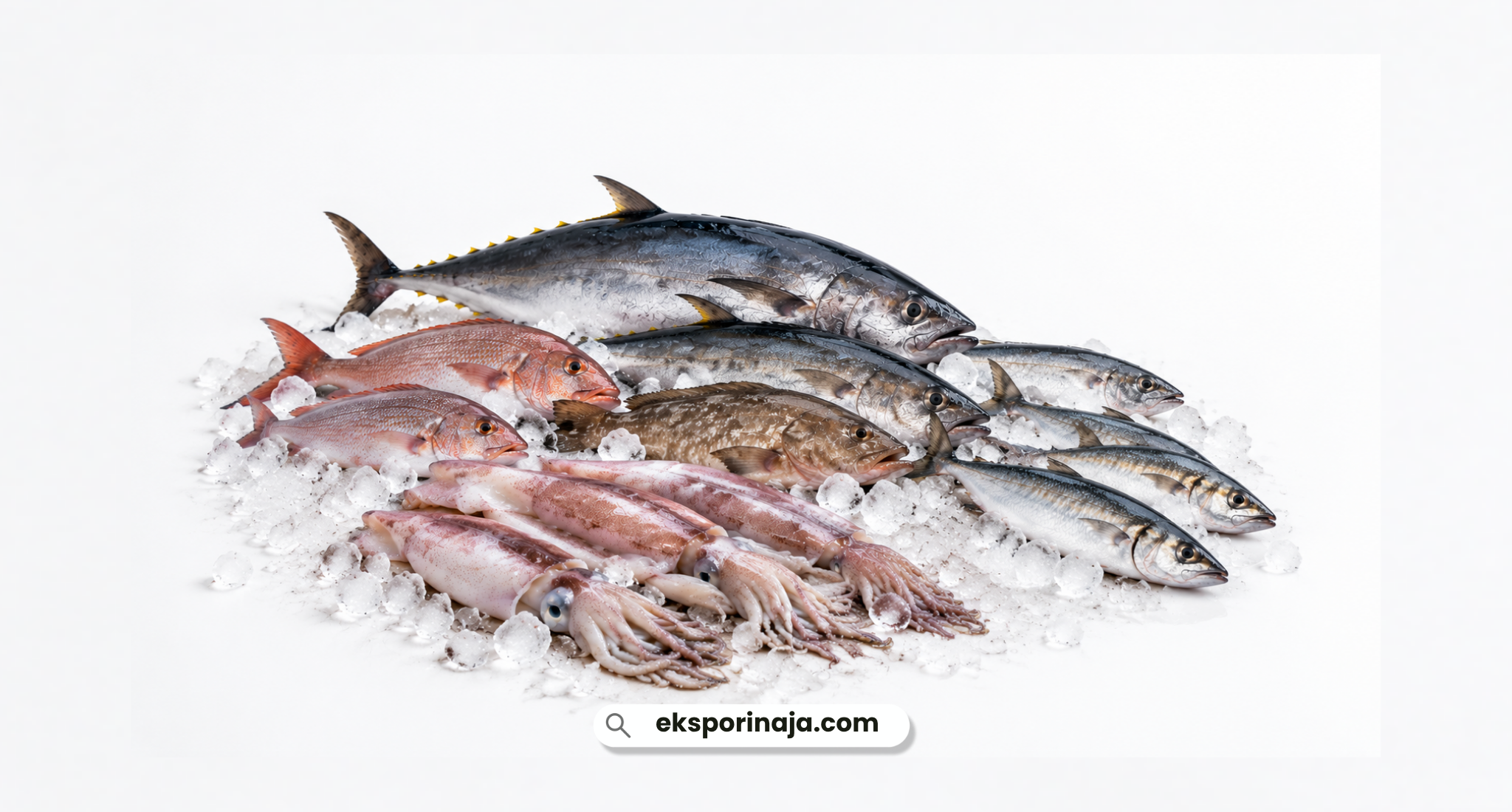
Indonesia is a country shaped by the sea. With thousands of islands and vast waters stretching across the tropics, the ocean has long been an important part of Indonesia’s economy, food culture, and local livelihoods. It is also the source of a wide range of seafood products that reach consumers and businesses around the world.
From tuna and squid to cuttlefish, shrimp, crab, and various marine fish, Indonesia offers a diverse seafood supply for different market needs. Behind every seafood product entering the international market is a journey that begins in local waters and continues through handling, processing, quality control, and distribution. Understanding this journey gives buyers a broader view of where seafood from Indonesia comes from and how it becomes part of global supply chains.
A Nation Surrounded by the Sea
Indonesia’s geography is one of the main reasons its seafood resources are so diverse. As an archipelagic country located between the Indian and Pacific Oceans, Indonesia has extensive coastal areas and marine ecosystems spread across many regions.
Its tropical waters provide habitats for a wide variety of marine species. Different fishing grounds and coastal environments contribute to the availability of different types of seafood, making Indonesia more than a source of a single commodity.
This geographical diversity creates opportunities for seafood businesses to work with different products according to market demand. Depending on the region and available supply, buyers may find products ranging from commonly traded fish to cephalopods, crustaceans, and other marine products.
The connection between local fishing communities, processing facilities, traders, and exporters allows these resources to move beyond domestic markets and become part of international seafood supply chains.
The Variety Beneath the Waves
One of the most interesting aspects of Indonesian seafood is its variety. Tuna is one of the country’s well-known seafood products, with different species and product forms available for international markets. Beyond tuna, Indonesia also supplies a range of other seafood products for food distributors, wholesalers, retailers, and foodservice businesses.
Squid and cuttlefish are examples of Indonesian cephalopods that are traded in international markets. Their different sizes, forms, and processing options make them suitable for various culinary and commercial applications. Indonesia also has a supply of shrimp, crab, and different marine fish that can be prepared according to buyer specifications and market requirements.
For buyers looking to understand individual commodities in more detail, exploring specific products can provide a closer look at their characteristics and potential applications. Our articles on Indonesian Yellowfin Tuna, Indonesian Loligo Squid, and Indonesian Cuttlefish offer more detailed perspectives on these products.
This variety is important for seafood sourcing because buyers do not always look for only one product. Some may need several seafood categories, while others may focus on a particular species, size, processing form, or target market. Indonesia’s broad seafood supply provides room for different sourcing requirements.
From Catch to Cold Chain
The journey of seafood does not end when it is caught or harvested. For products intended for wider distribution, proper handling after harvest is an important part of maintaining their condition throughout the supply chain.
Seafood generally requires careful temperature management because its quality can change quickly when it is not handled properly. This makes cold-chain management an important part of seafood distribution, particularly for products transported over long distances.
After being caught or harvested, seafood may go through several stages depending on the product. These can include sorting, cleaning, grading, freezing, processing, packaging, and storage. The exact process varies according to the species and the final product requested by the buyer.
Quality control also plays an important role along the way. Product specifications need to be checked, while packaging and storage conditions must be suitable for transportation. For export shipments, these steps help maintain product consistency from the point of origin to the final destination.
For buyers, understanding this process can be useful when evaluating a seafood supplier. The product itself is only one part of the sourcing decision. How it is handled, processed, stored, and prepared for shipment can also affect the overall sourcing experience.
What International Buyers Look for in Seafood Sourcing
When sourcing seafood internationally, buyers generally have several considerations beyond price. Product specifications are one of the first things to clarify. These may include species, size, grade, product form, quantity, packaging, and other requirements depending on the destination market.
Documentation is another important consideration. International seafood transactions may involve product specifications, shipping documents, health-related documentation, certificates, and other compliance requirements depending on the product and destination country. Having the necessary information prepared can make communication between suppliers and buyers more efficient.
Buyers may also need to consider relevant food safety requirements and certifications required by their target market. These requirements can vary depending on the seafood product, destination, and intended use, so understanding them early in the sourcing process can help avoid unnecessary delays.
Consistency is also important, particularly for wholesalers, distributors, and businesses that purchase seafood regularly. Buyers need to understand whether a supplier can provide the required product specifications and quantities according to an agreed schedule.
Communication matters as well. Clear information about product availability, specifications, packaging, lead times, and shipping arrangements can help both sides avoid misunderstandings during the sourcing process.
For this reason, international seafood sourcing is not simply about finding a product at the right price. It is about finding a supply partner that understands the product, the buyer’s requirements, and the practical steps involved in moving seafood from Indonesia to another market.
Indonesia’s Place in the Global Seafood Trade
Indonesia’s seafood industry is connected to buyers and markets across different regions. Its diverse marine resources, established processing and export networks, and wide range of seafood commodities create opportunities to serve different segments of the global market.
Global seafood buyers have different sourcing needs. Some may look for raw or minimally processed products, while others require frozen, cleaned, cut, or packaged seafood that is ready for further distribution or processing. These differences create opportunities for Indonesian suppliers to serve various types of businesses and market requirements.
Indonesia’s role in the seafood trade is therefore not defined by a single commodity. It is supported by a broader network of fishing communities, processors, traders, exporters, and other businesses involved in moving seafood from local waters to international destinations.
For international buyers, this diversity makes Indonesia an interesting sourcing destination when looking for seafood products from Southeast Asia. The journey from local waters to global markets is supported by the people and businesses involved at every stage, from the initial catch to the final shipment.
As global demand continues to evolve, Indonesian seafood has opportunities to reach new buyers and markets. At the same time, reliable sourcing, consistent quality, and clear communication remain important in building long-term connections between Indonesian supply and international demand.
Partner with PT Ekspor Indonesia Aja
Finding the right seafood product is only the beginning of an international sourcing process. Buyers also need reliable communication, clear product information, and a sourcing partner that can help connect their requirements with available products in Indonesia.
PT Ekspor Indonesia Aja supports international buyers in sourcing a variety of Indonesian products, including seafood and other export commodities. With access to different product categories and local suppliers, we help buyers explore sourcing opportunities based on their market and product requirements.
Looking for seafood products from Indonesia? Contact PT Ekspor Indonesia Aja to discuss your requirements and potential supply opportunities.
PT Ekspor Indonesia Aja
From Local to Global


Comments are closed