
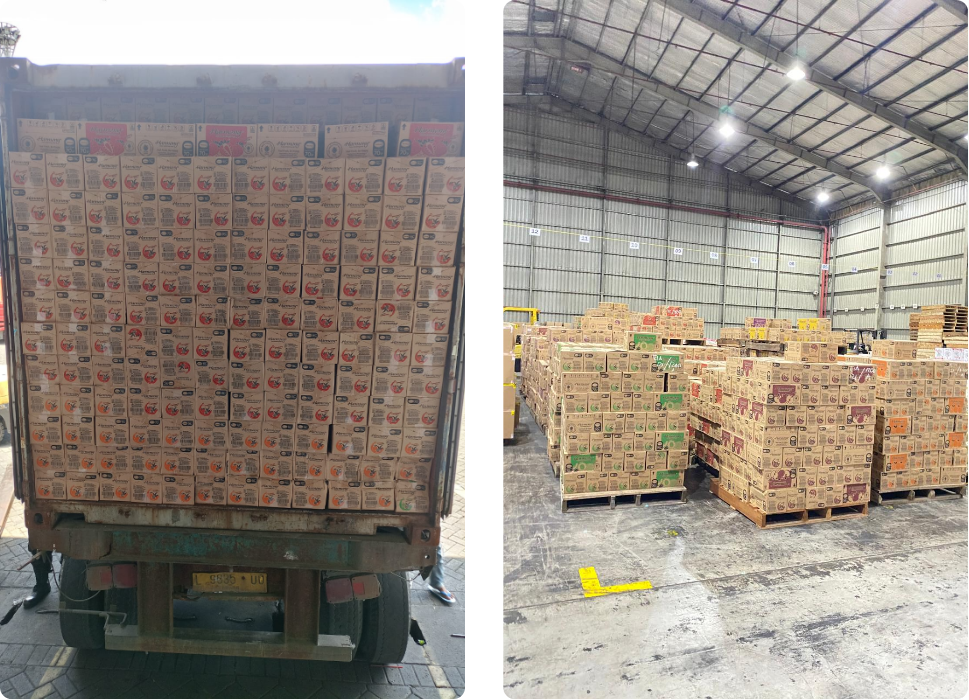
30 March 2026 – PT Ekspor Indonesia Aja has once again carried out an export activity by delivering its flagship personal care product, Harmony Soap, to the international market. In this transaction, the products were shipped to a buyer in Singapore, namely Sorab Enterprise PTE. LTD.
This activity represents an export transaction conducted based on buyer demand, where PT Ekspor Indonesia Aja acts as the exporter and Sorab Enterprise PTE. LTD acts as the importer. The shipment is not part of a long-term partnership, but rather a standard international trade transaction driven by market needs.
The exported products consist of Harmony Soap in various fruit fragrance variants such as grape, orange, strawberry, melon, apple, and lemon. Each variant is designed with a refreshing scent and consistent quality to meet consumer preferences in the international market, particularly in the Southeast Asian region.
The stuffing process was carried out at the warehouse facility of PT MIF Logistics located in Surabaya, East Java. The use of standardized logistics facilities ensures that the loading process is conducted safely and efficiently before shipment to the destination country.
The shipment was carried out using a 1 x 20-foot container, which is commonly used for transporting commercial quantities of goods with optimal cost efficiency and security. The selection of this container type was adjusted to the cargo volume and distribution requirements for the buyer in Singapore.
As one of the major trading hubs in Southeast Asia, Singapore maintains high standards for products entering its market. Therefore, the export of Harmony Soap represents a strategic step in expanding the reach of Indonesian products while strengthening their competitiveness in the global market.
Through this activity, PT Ekspor Indonesia Aja continues to demonstrate its role in promoting local products to penetrate international markets. Harmony Soap stands as an example of how Indonesian products are capable of competing in terms of quality and meeting the demands of overseas markets.


Comments are closed