Agriculture is an important part of Indonesia’s economy and everyday life. Across the country, farmers cultivate a wide range of crops that become fresh produce, food ingredients, processed products, and raw materials for different industries.
However, Indonesian agriculture is not simply about what grows on farms. Behind each agricultural product is a broader supply chain involving cultivation, collection, processing, packaging, distribution, and access to different markets. This creates a diverse agricultural sector with products that can serve both local and international businesses.
For international buyers, looking beyond individual commodities can provide a broader perspective on what Indonesia has to offer as an agricultural sourcing destination.
A Diverse Agricultural Landscape
Indonesia’s geographical diversity creates a broad environment for agricultural activities. Different regions have their own agricultural characteristics, products, and supply networks.
This diversity can be seen in the range of products available from Indonesian suppliers. Pulses, vegetables, fruits, spices, coffee, coconut, and other agricultural commodities are cultivated and supplied across different parts of the country.
The availability of these products can vary between regions and suppliers. Some businesses focus on fresh agricultural products, while others work with dried, processed, or packaged products.
For buyers, this means that sourcing agricultural products from Indonesia can involve different types of products and supply arrangements depending on the requirements of the target market.
More Than Just Fresh Crops
Agricultural products do not always reach the market in the same form in which they are cultivated. Depending on the commodity, they can be supplied as fresh produce, dried products, processed ingredients, or other commercial forms.
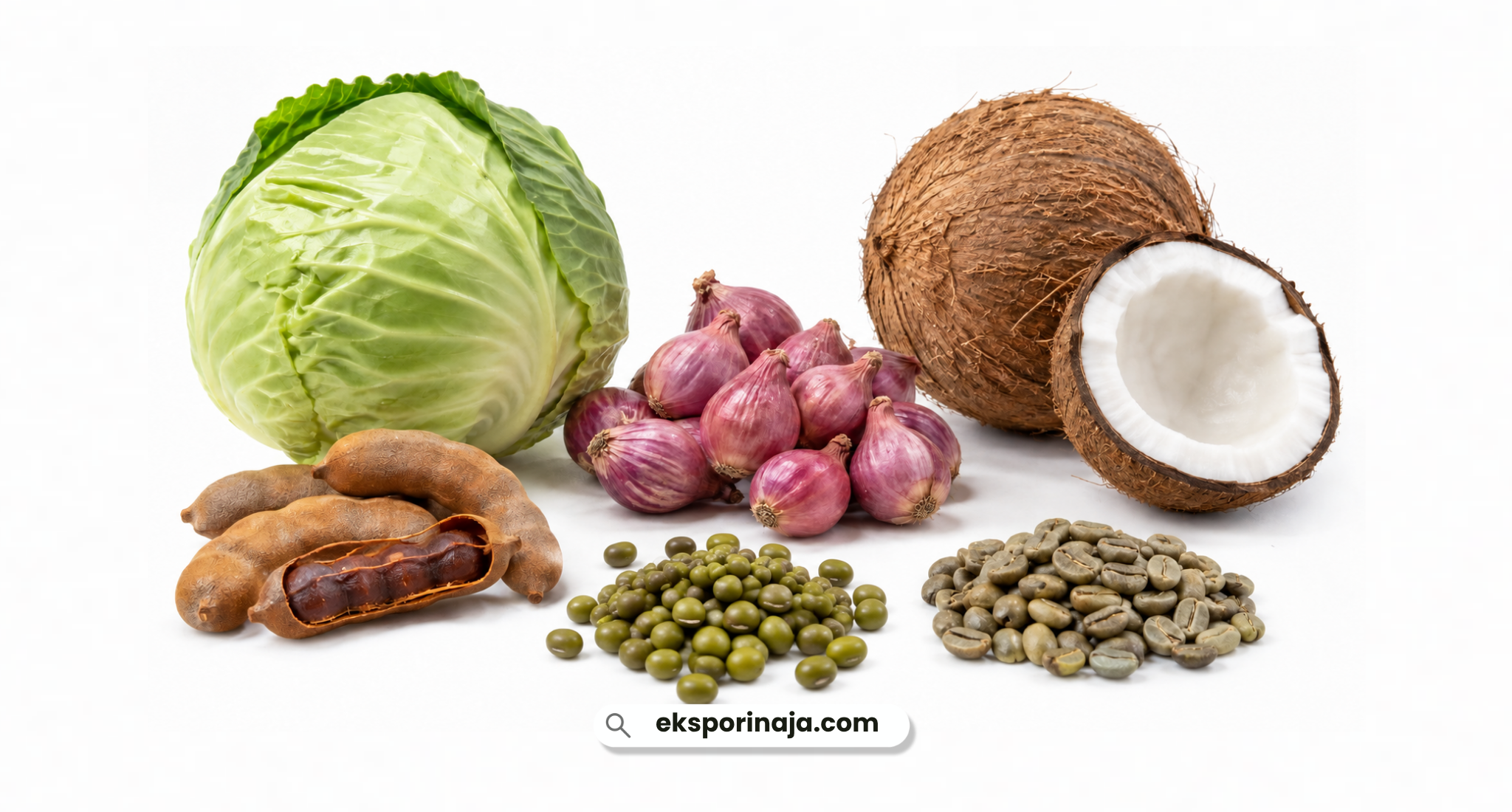
This creates more possibilities for agricultural products to serve different industries and markets. Mung beans, for example, can be used in food applications, while shallots and cabbage are commonly used in culinary and food markets. Tamarind can be processed into different forms for food applications, while coffee and coconut can become part of broader agricultural value chains.
Several of these products can be explored further through our individual articles on mung beans, shallots, tamarind, cabbage, green robusta coffee, and coconut products.
Looking at agriculture from this perspective shows that its commercial potential extends beyond cultivation. How a product is handled, processed, packaged, and supplied can influence the markets and applications it can serve.
From Local Products to Commercial Supply
Turning agricultural products into commercial supply involves more than cultivation. Once products move from farms into the supply chain, they may go through several stages before reaching their final buyer.
Collection, sorting, quality checking, processing, packaging, storage, and distribution can all form part of the supply chain, depending on the product. Each commodity may require a different approach, as fresh vegetables, dried products, coffee, and processed ingredients can have different handling and storage requirements.
For international sourcing, understanding this supply chain is important because buyers are not only purchasing a product. They are also working with a supply system that needs to meet their expected specifications, quantities, packaging requirements, and delivery arrangements.
A well-coordinated supply chain can therefore help connect local agricultural production with commercial demand.
Different Products for Different Markets
The diversity of Indonesian agriculture allows its products to serve a wide range of business sectors. Different agricultural products can have different applications, buyers, and distribution channels.
Some products may be suitable for food manufacturers looking for raw materials or ingredients. Others may be relevant to distributors, wholesalers, retailers, restaurants, or food service businesses.
The form of a product can also influence how it is handled and marketed. Fresh products, for example, may have different requirements from dried or processed products in terms of packaging, storage, and distribution.
Because of these differences, agricultural sourcing should begin with a clear understanding of the buyer’s intended use and target market. This helps suppliers identify an appropriate product form and supply arrangement.
What International Buyers Consider When Sourcing Agricultural Products
When exploring agricultural products from Indonesia, international buyers may consider several factors before choosing a supplier.
Product specifications are an important starting point. Depending on the commodity, buyers may need to clarify the variety, size, grade, form, packaging, quantity, and other product requirements.
Supply consistency can also be important, particularly for businesses that require regular purchases. Availability may change depending on agricultural conditions, harvest periods, local demand, and supplier capacity.
Other considerations may include packaging, documentation, communication, and delivery arrangements. Clear discussions between buyers and suppliers can help ensure that both sides understand the product requirements before an order moves forward.
For buyers entering the Indonesian agricultural market for the first time, working with a sourcing or export partner can also help them identify suitable products and suppliers according to their requirements.
Connecting Indonesian Agriculture with Global Demand
Indonesia’s agricultural sector creates opportunities to connect local production with international markets. However, reaching overseas buyers involves more than simply making products available.
Agricultural products need to be matched with the buyer’s requirements, target market, specifications, supply capacity, and commercial arrangements. This makes communication between suppliers, exporters, and international buyers an important part of the sourcing process.
An export partner can help bridge these connections by identifying available products, communicating with local suppliers, discussing specifications, and coordinating sourcing based on the buyer’s needs.
For international businesses, this can provide a more structured way to explore Indonesian agricultural products. Rather than approaching individual commodities without a clear direction, buyers can begin by identifying their requirements and then explore suitable sourcing options.
Exploring Indonesian Agricultural Products with the Right Partner
Indonesian agriculture offers more than a collection of individual commodities. It represents a diverse supply of fresh, dried, processed, and other agricultural products that can serve different industries and markets.
From mung beans and shallots to tamarind, coffee, cabbage, coconut, and other agricultural products, each commodity has its own characteristics, applications, and sourcing considerations.
For international buyers, exploring this diversity starts with understanding what product is needed, how it will be used, and what supply requirements need to be met. Finding the right local sourcing partner can then help connect those requirements with available products and suppliers in Indonesia.
Looking for agricultural products from Indonesia? Contact PT Ekspor Indonesia Aja to discuss your product requirements and sourcing needs.
PT Ekspor Indonesia Aja
From Local to Global


Comments are closed