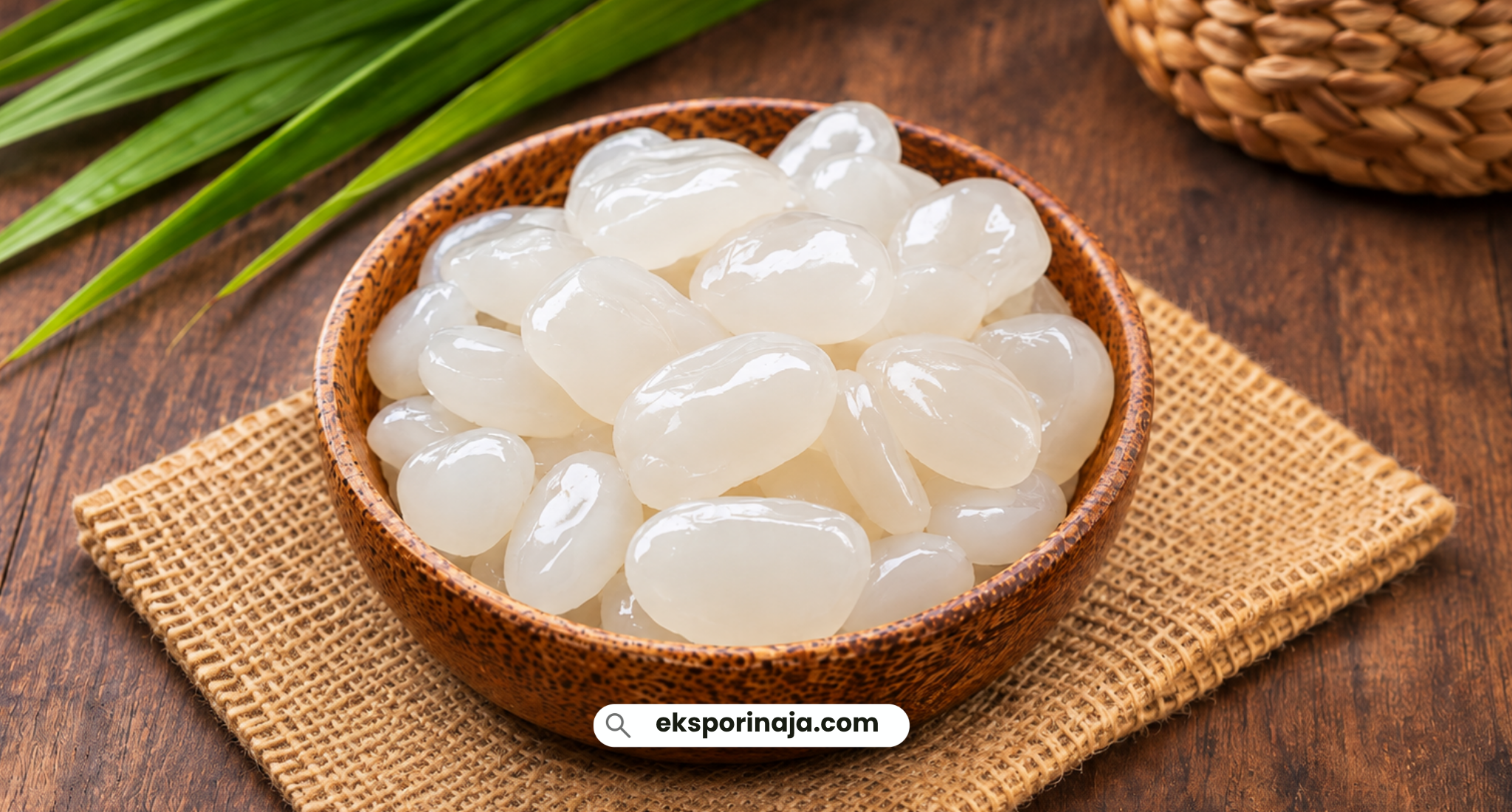
Sugar palm fruit, commonly known as kolang-kaling in Indonesia, is a tropical food with a refreshing taste and distinctive chewy texture. It is widely enjoyed in traditional desserts and beverages, particularly during warm weather and festive occasions. Its familiar place in Indonesian cuisine makes it an interesting example of how tropical agricultural products become part of everyday food culture.
Although commonly served in sweet preparations, sugar palm fruit has characteristics that distinguish it from the ingredients added during cooking or serving. Exploring its origins, nutritional characteristics, and traditional uses provides a closer look at this familiar Indonesian food.
What Is Sugar Palm Fruit?
Sugar palm fruit comes from the sugar palm tree (Arenga pinnata), a tropical palm widely found in Indonesia and other parts of Southeast Asia. The fruit is harvested at an immature stage and processed to produce the translucent, white pieces commonly recognized as kolang-kaling.
Its smooth appearance and chewy texture make it a distinctive ingredient in various Indonesian dishes. Before consumption, the fruit undergoes processing to remove the surrounding layers and prepare the edible portion. This preparation transforms the harvested fruit into the familiar ingredient enjoyed in many households.
The sugar palm tree is also valued for other products, including palm sugar, starch, and fibers. However, its edible fruit remains particularly recognizable in Indonesian food culture because of its traditional culinary uses.
Sugar Palm Fruit Nutrition
Sugar palm fruit contains a considerable amount of water, contributing to its moist texture and refreshing quality. It also contains carbohydrates and other naturally occurring components, although its nutritional composition can vary depending on maturity and processing methods.
Dietary fiber is another component sometimes discussed in relation to kolang-kaling. Its actual nutritional contribution, however, depends on the composition of the prepared fruit. The presence of a particular nutrient does not necessarily mean that the food provides it in substantial amounts.
The nutritional characteristics of sugar palm fruit should also be distinguished from those of the dishes in which it is commonly used. Plain kolang-kaling differs from preparations containing sugar syrup, coconut milk, or sweetened condensed milk.
These variations make sugar palm fruit a useful example of how the preparation of an ingredient can influence the overall characteristics of a food.
Sugar Palm Fruit in Everyday Food Preparation
Sugar palm fruit is appreciated for its mild taste and distinctive texture, which allow it to complement a variety of ingredients. Rather than being associated with one particular recipe, kolang-kaling can be incorporated into different preparations depending on culinary preferences.
Its versatility makes it suitable for traditional desserts, refreshing beverages, and sweetened food products. The fruit’s chewy texture also provides contrast to other ingredients, making it recognizable in many Indonesian recipes.
As with other food ingredients, the overall characteristics of a preparation depend on the combination of ingredients, portion sizes, and methods used during cooking or serving. This is particularly relevant when sugar palm fruit is incorporated into desserts containing additional sweeteners or other components.
Plain and Sweetened Sugar Palm Fruit Are Not the Same
One important consideration when discussing sugar palm fruit is the difference between the fruit itself and the dishes made from it. In Indonesia, kolang-kaling is frequently prepared with sugar syrup or incorporated into desserts containing additional ingredients.
Sweetened kolang-kaling differs from plain fruit in both taste and nutritional composition. Added sugar contributes to the energy content of a preparation, while ingredients such as coconut milk or sweetened condensed milk may introduce additional fat, sugar, and calories.
This distinction is particularly relevant when comparing different kolang-kaling products. Nutritional information associated with plain sugar palm fruit cannot automatically be applied to candied fruit or desserts containing other ingredients.
Understanding these variations helps consumers appreciate the different ways sugar palm fruit can be prepared while making more informed choices about the foods they enjoy.
How Sugar Palm Fruit Is Enjoyed in Indonesia
Sugar palm fruit has an established place in Indonesian culinary traditions. Its refreshing texture makes it particularly popular in desserts and beverages, especially during warm weather and Ramadan.
One familiar preparation is es campur, a traditional Indonesian iced dessert that combines several ingredients, including fruit, sweet syrup, and ice. Kolang-kaling contributes a chewy texture that complements the other ingredients.
Another popular preparation is kolak, a traditional dessert commonly made with coconut milk, palm sugar, bananas, or sweet potatoes. Sugar palm fruit can also be included to add texture and variety.
Other applications include candied kolang-kaling, fruit-based refreshments, and various festive desserts. These dishes demonstrate how a tropical ingredient can be incorporated into different recipes while maintaining its distinctive characteristics.
Sugar Palm Fruit as an Indonesian Agricultural Product
Sugar palm fruit is one example of how Indonesia’s agricultural resources contribute to its diverse food culture. The sugar palm tree provides several useful products, while its edible fruit has become a familiar ingredient in traditional food preparations.
Kolang-kaling also illustrates how agricultural products can be developed into different food ingredients and processed products. Its traditional familiarity provides an interesting starting point for understanding Indonesia’s broader agricultural diversity.
Beyond traditional culinary applications, sugar palm fruit can be considered for different food product developments depending on processing methods and intended uses. As with other agricultural commodities, commercial applications require attention to product quality, specifications, storage, and market requirements.
Discover Indonesian Agricultural Products with PT Ekspor Indonesia Aja
Indonesia offers a wide range of agricultural products and food ingredients with diverse characteristics and applications. Sugar palm fruit is one example of the country’s agricultural diversity and its connection to traditional food culture.
PT Ekspor Indonesia Aja connects international buyers with Indonesian products across various categories, including agricultural commodities and food ingredients.
For inquiries about Indonesian products and sourcing opportunities, visit Contact PT Ekspor Indonesia Aja to discuss your product requirements and sourcing needs.
PT Ekspor Indonesia Aja
From Local to Global

Comments are closed