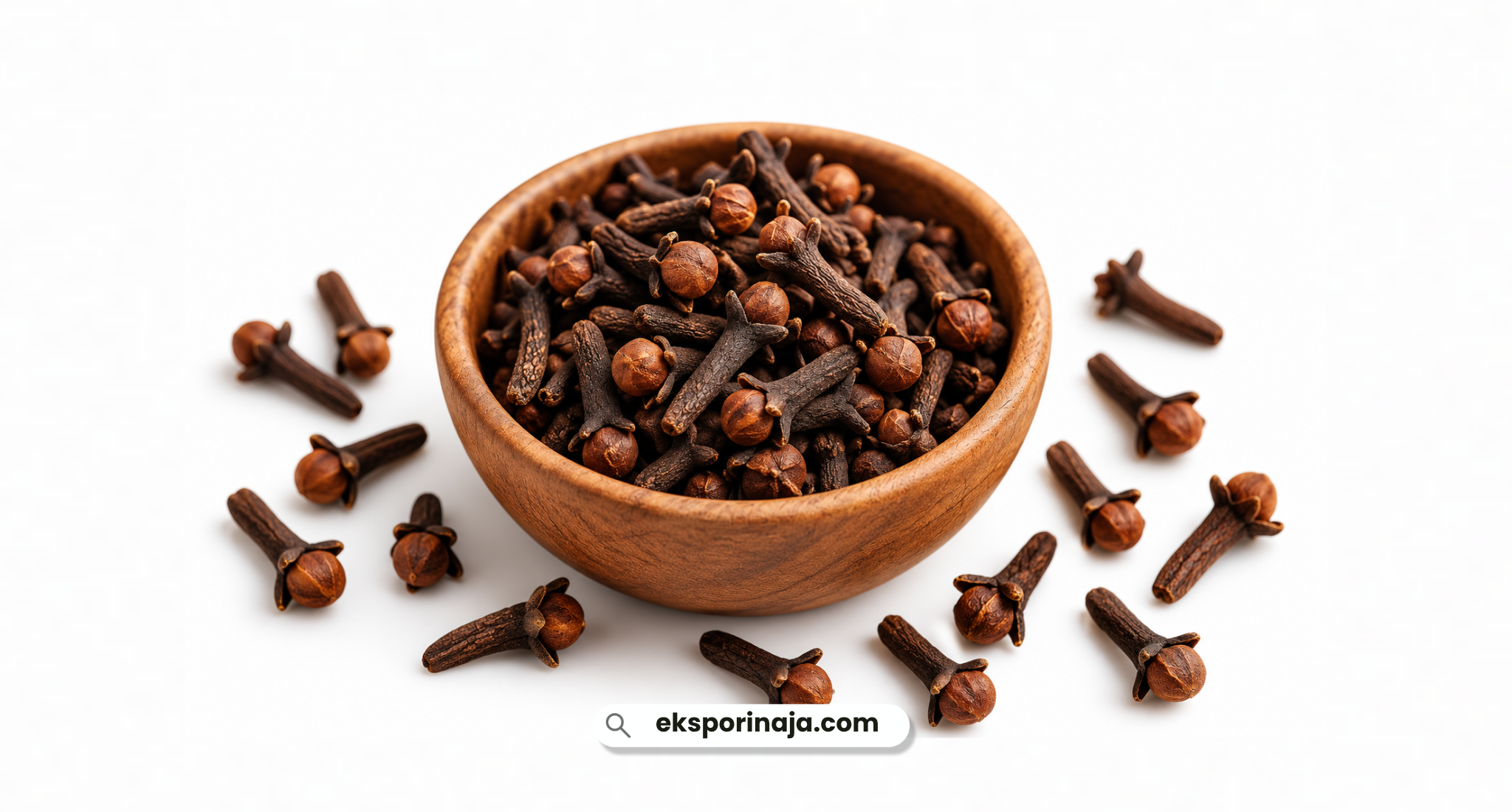
Cloves are known for their distinctive aroma and warm, spicy flavor, making them a familiar ingredient in kitchens around the world. Obtained from the dried flower buds of the clove tree (Syzygium aromaticum), this spice has been valued for generations in culinary traditions across many cultures.
Beyond cooking, the uses of cloves in modern industries extend to food manufacturing, fragrance production, personal care, and certain dental materials. Their suitability for these purposes depends on how they are processed and the properties required in the final product. This versatility highlights the value of cloves as an Indonesian agricultural commodity.
Understanding Cloves and Their Unique Characteristics
Cloves are harvested as flower buds before they open and then dried to produce the familiar brown spice. The plant is native to Indonesia’s Maluku Islands, although clove trees are now cultivated in several tropical regions.
Their characteristic aroma is largely associated with eugenol, a naturally occurring compound found in clove essential oil. The oil’s chemical composition can vary according to the plant part used and the extraction process, influencing its aroma and potential uses.
For commercial purposes, cloves are available as whole dried buds, ground spice, essential oil, and oleoresin. Whole and ground cloves are commonly used in food preparation, while concentrated extracts provide aromatic or flavoring ingredients for selected manufacturing processes.
Cloves in the Food and Beverage Industry
The food and beverage sector uses cloves for their strong aroma and characteristic flavor. Whole or ground cloves can be incorporated into spice blends, sauces, baked goods, pickled foods, and traditional dishes.
They also feature in certain beverages, including spiced teas and traditional drinks. When combined with cinnamon, ginger, and other spices, cloves contribute a warm flavor that complements the other ingredients.
Ginger also plays an important role in traditional beverages across different cultures. To learn more about its uses, explore our article Ginger in Traditional Drinks Across Different Cultures.
For food manufacturers, clove essential oil and oleoresin offer additional ways to introduce clove flavor into suitable formulations. Because these extracts are concentrated, their use requires careful measurement and consideration of the intended food application.
The choice between whole spices, ground cloves, and extracts depends on the recipe, desired flavor intensity, and applicable food safety requirements. Consistent ingredient specifications and appropriate handling can help manufacturers maintain the intended flavor profile during production.
Clove Oil in Fragrance and Personal Care Products
Clove essential oil is obtained from different parts of the clove plant, including its flower buds, leaves, and stems. Oils produced from these materials can differ in chemical composition and aroma, making the source material important when selecting an ingredient.
In fragrance formulations, clove oil can contribute warm, spicy notes that complement floral, woody, and other aromatic components. Rather than serving as the sole source of a product’s scent, it is often incorporated into a broader fragrance composition.
Clove-derived ingredients are also used in selected personal care products, including soaps and certain cosmetic formulations. Their suitability depends on the intended use, concentration, overall formulation, and relevant safety standards.
These uses demonstrate how cloves can provide aromatic ingredients for products beyond the food sector. As with other essential oils, appropriate formulation and handling are important because concentrated oils may cause irritation when used improperly.
Cloves in Dental and Specialized Applications
One specialized use of cloves involves eugenol, a compound found in clove oil that has a long history in dentistry. It is incorporated into certain dental materials for specific professional purposes.
An example is zinc oxide–eugenol, a material used in selected dental procedures. In this preparation, eugenol is combined with zinc oxide to produce a material with properties suited to particular dental applications.
Clove-derived compounds may also be included in certain pharmaceutical preparations, depending on the formulation, intended use, and applicable regulations. Their presence in a specialized product does not mean that raw cloves or clove oil can provide the same effect.
It is important to distinguish these professional applications from everyday spice use. Raw cloves and undiluted clove oil should not be used as substitutes for appropriate dental care or medical treatment.
Processing Cloves for Different Applications
Processing determines the form in which cloves are supplied and how they may be used. Whole dried buds are commonly traded as spices, while ground cloves can be incorporated more easily into seasoning blends and food preparations.
Clove essential oil is commonly obtained through distillation, producing a concentrated aromatic ingredient. Clove oleoresin is an extract that captures flavor and aroma components and can be used in selected food formulations.
Quality management is important throughout processing, packaging, and storage. For dried cloves, moisture levels, cleanliness, and storage conditions can affect product quality. Essential oils and oleoresins also require suitable containers, handling practices, and storage conditions to preserve their characteristics.
For businesses purchasing cloves as raw materials, clear specifications can help establish whether a product meets the requirements of its intended use. Factors such as product form, quality, and processing method are therefore important considerations in commercial sourcing.
Indonesian Cloves and Their Agricultural Value
Indonesia has a long history of clove cultivation and trade, particularly associated with the Maluku Islands, where the plant originated. Cloves subsequently became established in other Indonesian growing regions and remain an important agricultural commodity.
A distinctive feature of Indonesia’s clove industry is its close connection with kretek cigarette manufacturing. The domestic tobacco industry has historically accounted for a substantial share of clove use, alongside other markets such as food seasoning, essential oil production, and fragrance ingredients.
This domestic demand makes the kretek industry an important part of the country’s clove economy. At the same time, the range of other uses creates demand for cloves in different forms, from dried flower buds to processed extracts.
The requirements of each market can vary considerably. Food manufacturers may prioritize flavor and cleanliness, while buyers of essential oils may focus on composition and product specifications. Understanding these differences helps businesses evaluate the suitability of Indonesian cloves for their intended applications.
Exploring Indonesian Agricultural Products with PT Ekspor Indonesia Aja
Cloves illustrate how a traditional Indonesian crop can serve multiple sectors, from food preparation to fragrance production and specialized professional uses. Their commercial value depends not only on their distinctive characteristics but also on processing, quality, and the requirements of each market.
Indonesia produces a wide range of agricultural commodities that serve different industries and consumer needs. Learning about these products and their characteristics can help businesses identify options that align with their sourcing requirements.
PT Ekspor Indonesia Aja connects international buyers with Indonesian products across several categories, including agriculture, seafood, and fast-moving consumer goods (FMCG).
For businesses interested in Indonesian products, contact PT Ekspor Indonesia Aja to discuss your requirements.
PT Ekspor Indonesia Aja
From Local to Global

Comments are closed